The Nitazene Threat: Canberra Detects Darknet Opioid 100x Stronger than Fentanyl
The Yellow Pill in the Capital
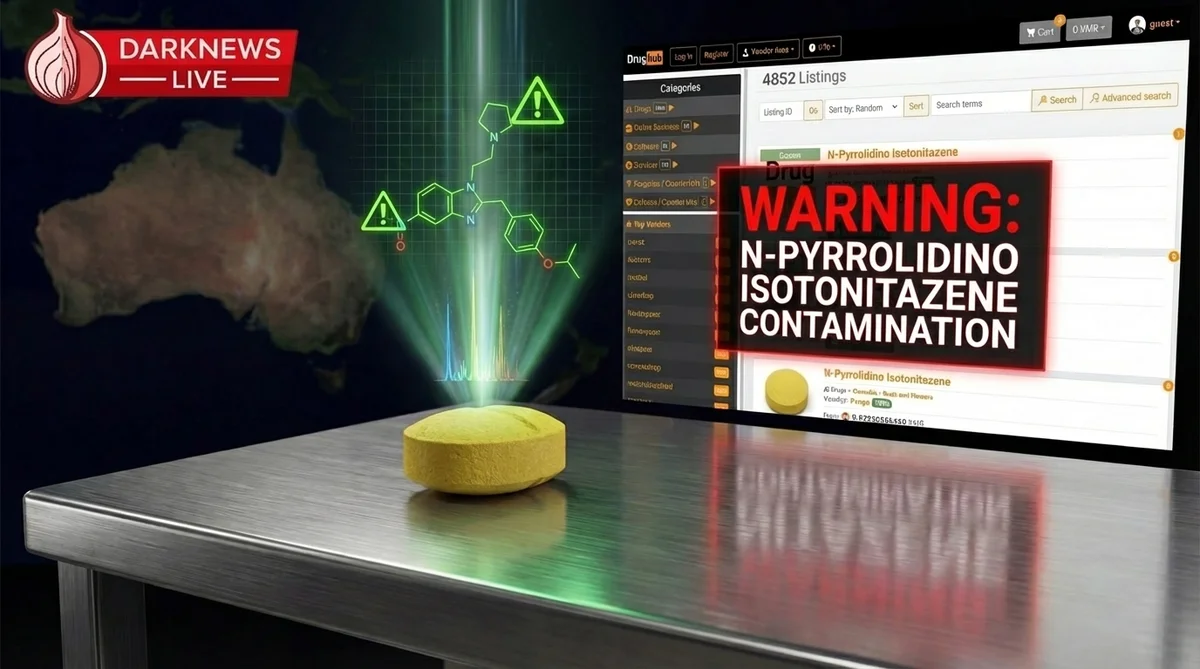
The illusion of quality control on the darknet took another hit this week. In Canberra, Australia's only fixed-site drug checking service, CanTEST, issued an urgent 'Red Alert' after analyzing a yellow pill purchased on the dark web. The buyer believed they had acquired legitimate Oxycodone. They were wrong. The pill contained N-Pyrrolidino Isotonitazene, a synthetic opioid from the nitazene class that is estimated to be 100 times more potent than fentanyl and 1,000 times stronger than morphine.
A Lethal Bait-and-Switch
The danger here is not just potency; it is deception. Unlike fentanyl, which is often known to the buyer, nitazenes are increasingly appearing in counterfeit pharmaceuticals sold as 'clean' meds. The Canberra sample was pressed to look like a standard painkiller. Dr. David Caldicott of CanTEST stated bluntly: 'You could clearly be killed.' This incident mirrors trends seen in Colorado and across the US, where fake 'M30' tablets contain lethal doses of carfentanil. The supply chain is poisoned, and the darknet vendors pushing these pressies are playing Russian Roulette with their customer base.
Market Politics: To Ban or To Profit?
This discovery reignites the oldest debate in darknet administration: The Ethics of the Ban list. Since the days of the original Silk Road, admins have been divided on whether to allow high-lethality opioids.
The Regulation Approach
Historically, savvy admins (like those of AlphaBay or White House Market) strictly banned Fentanyl and its analogues. The logic was cold but sound: Dead customers don't leave reviews, they bring heat. Law enforcement agencies prioritize markets linked to overdose deaths. Banning these substances was a survival strategy, an attempt to keep the market 'clean' enough to avoid the highest tier of law enforcement scrutiny.
The 'Archetyp' Philosophy
Conversely, other admins adopted a radical libertarian stance. Before his arrest in June 2025 during 'Operation Deep Sentinel,' the administrator of Archetyp Market, known as 'ASNT' (Marc Hegemeister), presided over a platform that took a more permissive approach to pharmaceutical listings. While Archetyp was celebrated for its UI and Monero infrastructure, its moderation regarding synthetic opioids was often criticized as lax. By allowing vendors to list 'Research Chemical' opioids or failing to police mislabeled 'Oxy' listings, markets like Archetyp became conduits for substances like N-Pyrrolidino Isotonitazene. ASNT's capture in Barcelona serves as a grim reminder: when your platform becomes a vector for mass fatal overdoses, the state will spare no expense to hunt you down.
The Nitazene Profile
Nitazenes are not new, but their prevalence is surging as China cracks down on fentanyl precursors, forcing chemists to dig into obscure 1950s research papers for alternatives.
- Potency: N-Pyrrolidino Isotonitazene requires a microscopic dose (approx 0.2mg or less) to be fatal.
- Resistance: Standard doses of Naloxone (Narcan) are often insufficient. Overdoses may require multiple vials to reverse respiratory depression.
- Detection: Most standard reagent test kits cannot identify nitazenes. Only advanced spectrometry (FTIR), like that used by CanTEST, can confirm its presence.
Final Warning
The darknet is not a pharmacy. The badge of a 'Verified Vendor' does not guarantee they aren't reselling a batch of Chinese pressies laced with elephant tranquilizers. If you are buying pills on the dark web today—whether on the remnants of Archetyp or new upstarts—you must assume they are lethal until proven otherwise by a spectrometer. The admin isn't checking the product, and the vendor only cares about the crypto clearing.
Discussion 0
Leave a Reply